A new year
It has been an intense spring so far. Many seeds planted, chillies potted on, spuds in the ground, and borders turned anew. It is also the first year we’ve had the greenhouse in Spring. We only finished building it at the end of May 2025.
We have split our attention a little more effectively so far this year. The allotment has been rotavated, mucked, and planted (albeit modestly so far). We have bought in timber to edge the allotment and make the paths both square and nearly delineated from the plot itself. In the ground we have just potatoes, onions, garlic, and radish. We have made space however for cut flowers at the far end and for tomatoes in the greenhouse (frame) again.
The allotment greenhouse remains unglazed. Perhaps this is for the best. It makes it easier to keep things watered, and the frame is yet still useful for stringing up the tomato plants. We can also put netting over it to make a fruit cage of sorts, which might keep the pigeon poop off our tomato plants (or atomise it so everything gets showered…).
The cut flowers this year are to be Cosmos (of course!), sunflowers ‘Little Dorrit’[RHS], and dahlias. I’ll plant the dahlias from last year up there. Rachel is hoping we can make a stir with the ‘Bohemian Spartacus’[RHS] – and I would like to see how they fare in proper soil, as opposed to pots; and with proper staking, as opposed to almost nothing. I hope they’ll do quite well in the flower show at the end of August. In the winter I’ll dedicate some space for a row of roses; I have come to the realisation that allotment gardening won’t save us money on veg, but it does make cut flowers substantially more affordable! A bunch of roses in the supermarket is about £6, so a row of rose plants chosen for cut flowers at the allotment will mean I can feel less stingy about flowers for the house.
Sadly, despite our glut of plants at this time of the year, events have conspired to keep us away from the plant swap. I think we must have about 50 chillies in total, in various stages of pointing up. We had far better success with soil this year. The plants are compact, dense, and healthy. A big difference compared to last year, where they all failed to thrive in the compost we chose.
Compost woes
It does seem a pity that most garden centre composts are made by Westland exclusively. This year we bought Jack’s Magic - 3 bags - and were pleasantly surprised. It seemed good quality, and it had a certain squishy muddiness to it which inspired confidence. Jack’s Magic is a Westland brand, so there’s hope we thought. We bought another 3 bags later, but this time the compost was radically different. Mostly wood fibre and without the substance of the bags we bought previously. This felt and looked almost identical to Miracle Grow (yet another Westland brand).
It’s pretty frustrating, we’re paying for magic and only getting miracles. I want to sink time and effort into plants in a way that’s rewarding, and part of the reward of gardening is learning and improving year-on-year. But such improvement is not methodical if even the basics like compost are so widely variable. I don’t know what we’re to do.
We did notice that the Jack’s Magic compost is surprisingly circumspect about whether it is peat free or not. It was my impression that all consumer composts had to be peat free now – but I could not find evidence one way or t’other for Jack’s Magic. The reduction in peat in compost is certainly a good thing environmentally. Peat is non-renewable (it takes hundreds or thousands of years to form) and is part of habitats across the British Isles (and elsewhere). While peat cutting is culturally significant in Scotland and Ireland, industrial scale use of peat will use up our supplies quick-fast. Besides which, using it in compost releases carbon which was otherwise sequestered indefinitely in peat bogs. The RHS and gardening programmes like Gardeners World will always recommend “a good quality peat free compost” now as almost a mantra.
Yet, many of the gardeners I speak to are increasingly weary about the water retention and nutrition in their peat free composts. It has a tendency to dry and shrink significantly away from the pot edge, and to form a surprisingly waterproof “crust”. Any period of under watering is rewarded with a borderline hydrophobic mix of dust and wood fibre around your plants’ roots. Clearly not great for plants or gardeners. Is Jack’s Magic peat free but quiet about it because of the poor reputation of peat free composts? Is it actually a peat based compost that is currently transitioning? Is it just the same as any other garden compost and the brand differential just gives an illusion of choice like Duff, Duff Lite, and Duff Dry.
I think what must be done is making compost at home. This is difficult for us. Our garden is a very small city plot, and we could make room for a compost bin, but it would be at some cost in our garden. I think a mix of leaf mould, sieved real homemade compost, and topsoil would be ideal — but this in itself will be another multi-year experiment.
In the meantime we’ll continue to be at the whims of wildly varying commercial composts.
Plant labels
We now have a fair few roses. Well, at least enough that I struggle to remember their varieties. Five. I have a poor memory. I’ve long been enamoured with the engraved white text on black background labels that are found in professional gardens. Some research online made it clear they’re a bit niche for home gardeners. There’s a few options for laser engraved labels. At first glance it appears there’s lots of choices offered by a multitude of sellers across eBay, Etsy, and Amazon… in reality of course it’s the same 3 or so Chinese drop-shipped products. And regrettably laser engraving and rotary engraved are hard to distinguish in search terms where titles are cynically gamed for maximum clicks (whether it’s what you actually want or not…)
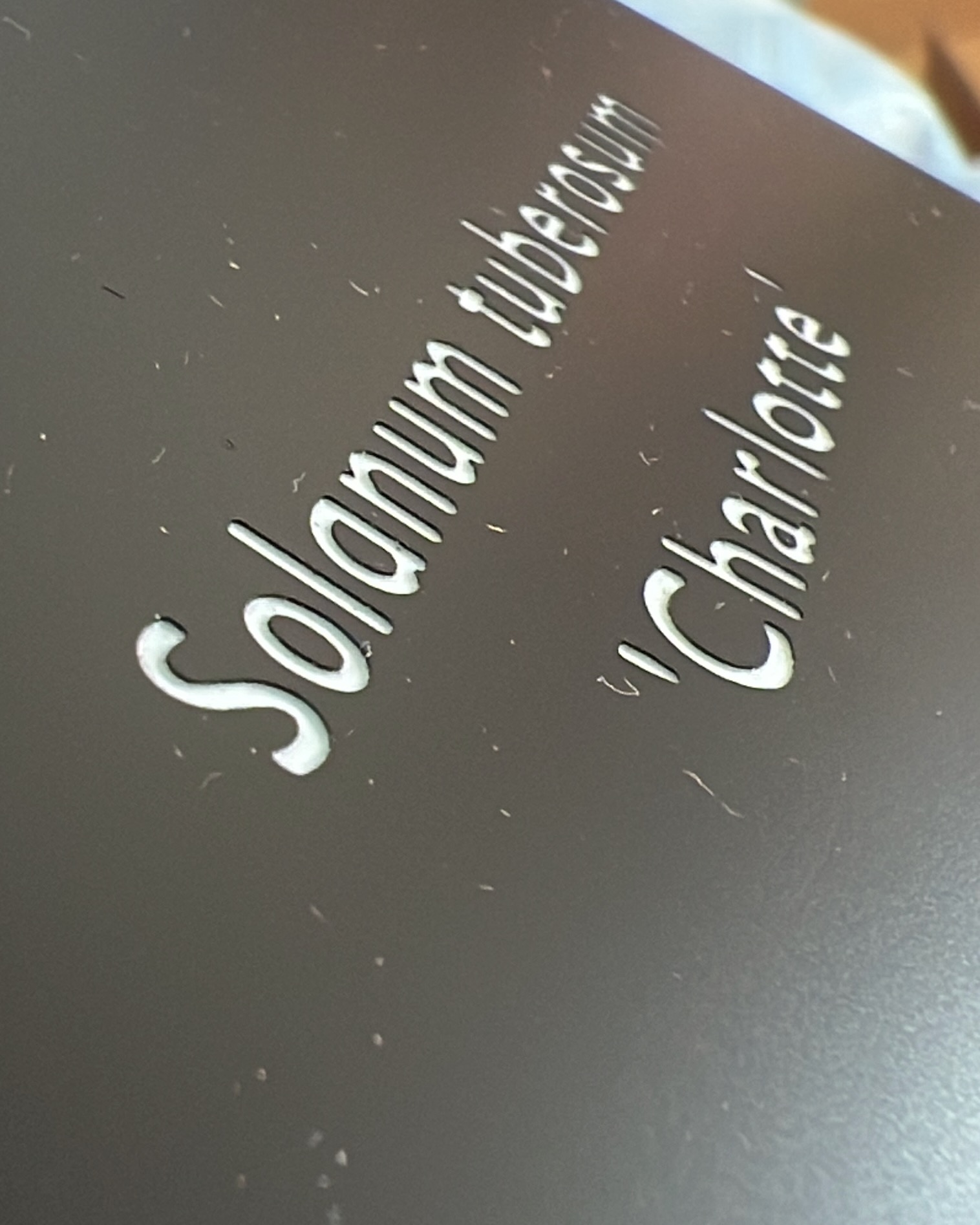 It is my opinion at least that rotary engraved 2-layer plastic is basically perfect in the garden.
Extremely resilient to scratches, almost perfect contrast, and somewhat 3 dimensional letter forms.
Laser engraving lacks all these qualities.
It is my opinion at least that rotary engraved 2-layer plastic is basically perfect in the garden.
Extremely resilient to scratches, almost perfect contrast, and somewhat 3 dimensional letter forms.
Laser engraving lacks all these qualities.
Anyway, after some research I came across Winterling. As best I can tell it’s a small cottage industry of one person and an engraving machine, who makes professional plant labels for botanical gardens and national plant collections. National plant collections, it turns out, have quite specific requirements on labelling and cataloguing of individual plants. John provides a simple spreadsheet template to fill in, and I have dutifully done so albeit with some minor questions about typical botanical nomenclature.
Binomial classification
I’m familiar with the system of binomial nomenclature which is used for classifying life. Names like Nicotiana sylvestris[RHS] for woodland tobacco plant. It turns out, of course, there are exceptions and strangenesses to these rules - especially around highly cultivated plants.
Roses are in the family Rosa, for example Rosa floribunda, but many are not further sub-classified. My David Austin rose Rosa ‘Princess Alexandra of Kent’ does not get a species name and is just known by the family and the cultivar1 name. I’m not really sure of the reason why. Hybrids also have their own rule. In the garden we have Exocorda ⨉ macrantha ‘The Bride’[RHS] - a hybrid flowering shrub better known as pearl bush. Some further are just known as Species hybridus. I’m sure there’s structure, rhyme, and reason to all of these apparent irregularities, but truth be told it eludes me.
John offers some help with typical botanical labelling, so hopefully my uncertainties about labelling my roses will be put to ease by him.
A few weeks later, and they’re here!
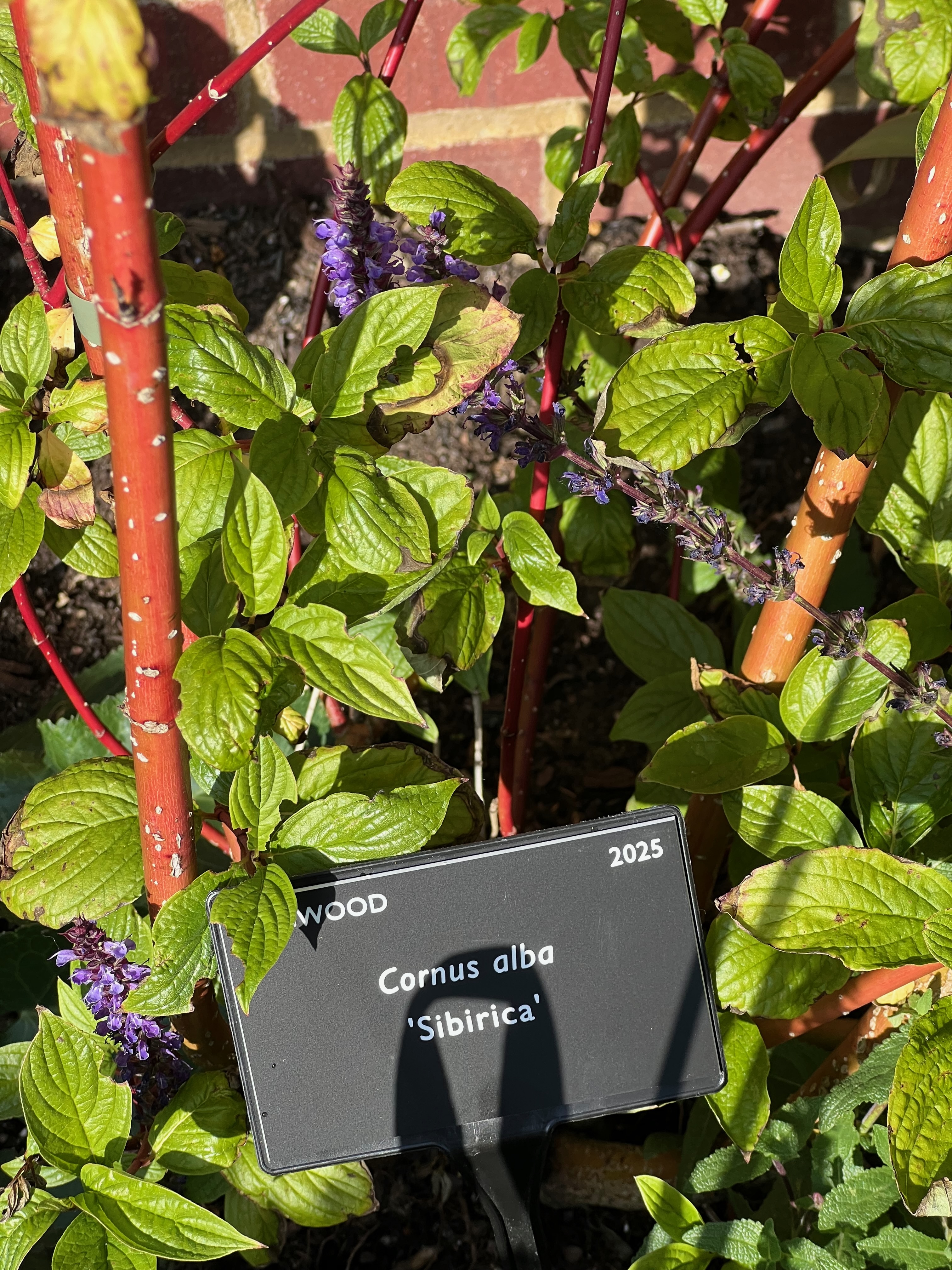
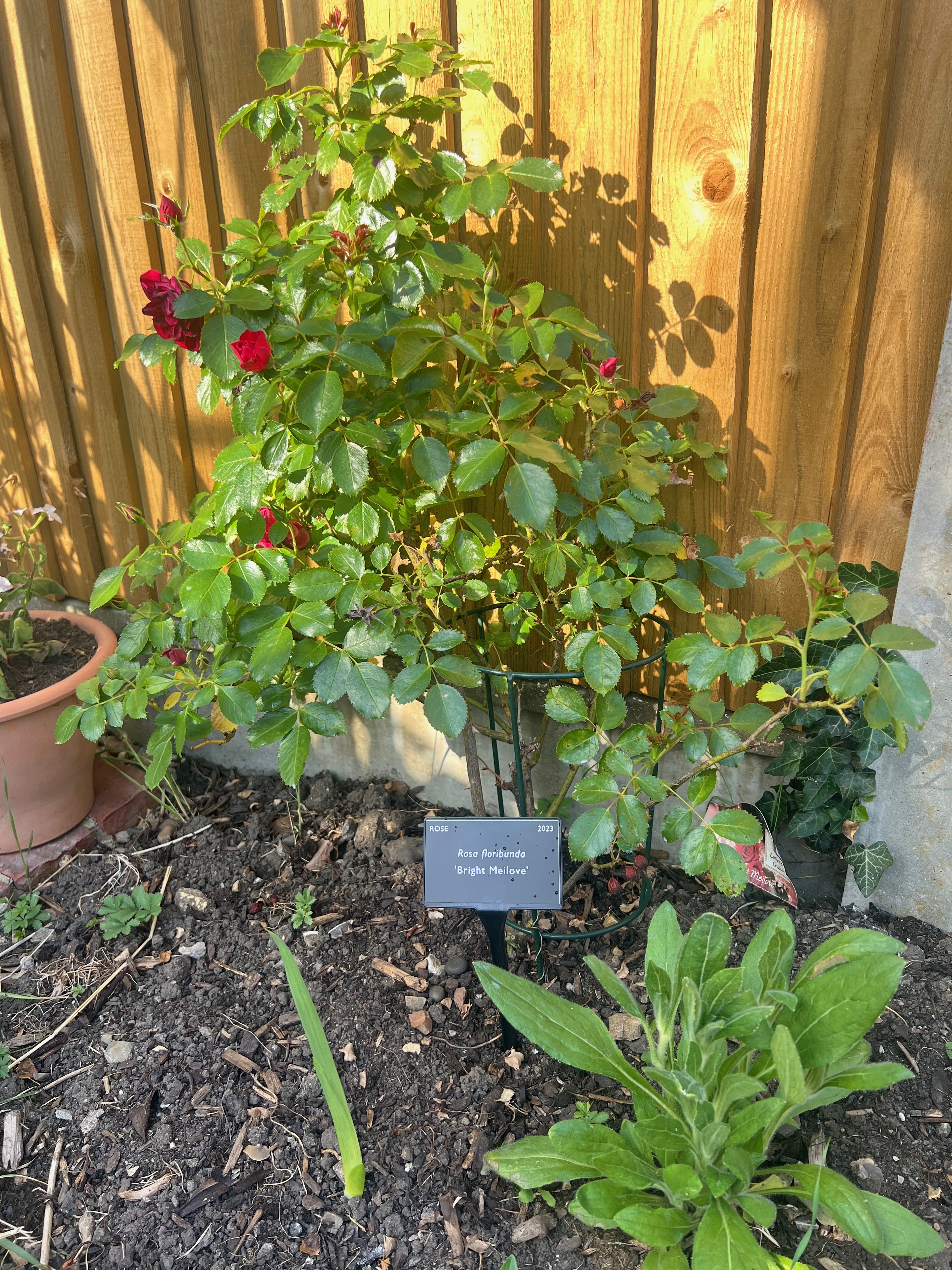
They look very swish, if a little ostentatious for such a small garden. Still, I won’t forget which rose is which any more.
Borders
I’m increasing excited about a cottage garden look for our garden. I love the overflowing froth of flowers and scruffy foliage. This year I’m trying a couple of new additions to the mix, in the hopes of stretching out the sense of abundance later into the year.
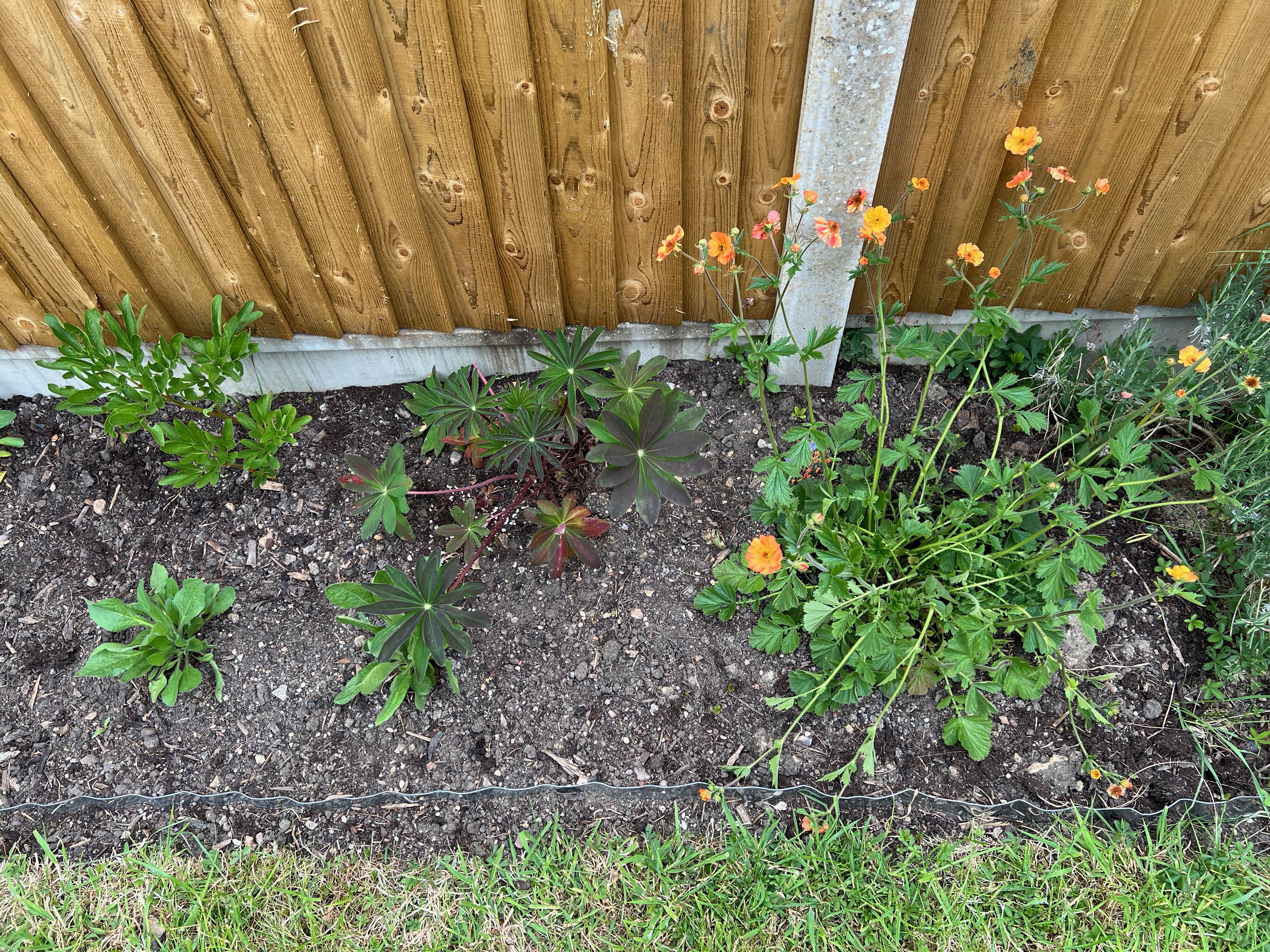 I’ve added Rudbeckia and Lupins into the back garden.
I’ve deliberately lost track of what Rudbeckia is which because the surprise will be fun and I did at least mix them, so they won’t look oddly placed (I hope).
I’ve added Rudbeckia and Lupins into the back garden.
I’ve deliberately lost track of what Rudbeckia is which because the surprise will be fun and I did at least mix them, so they won’t look oddly placed (I hope).
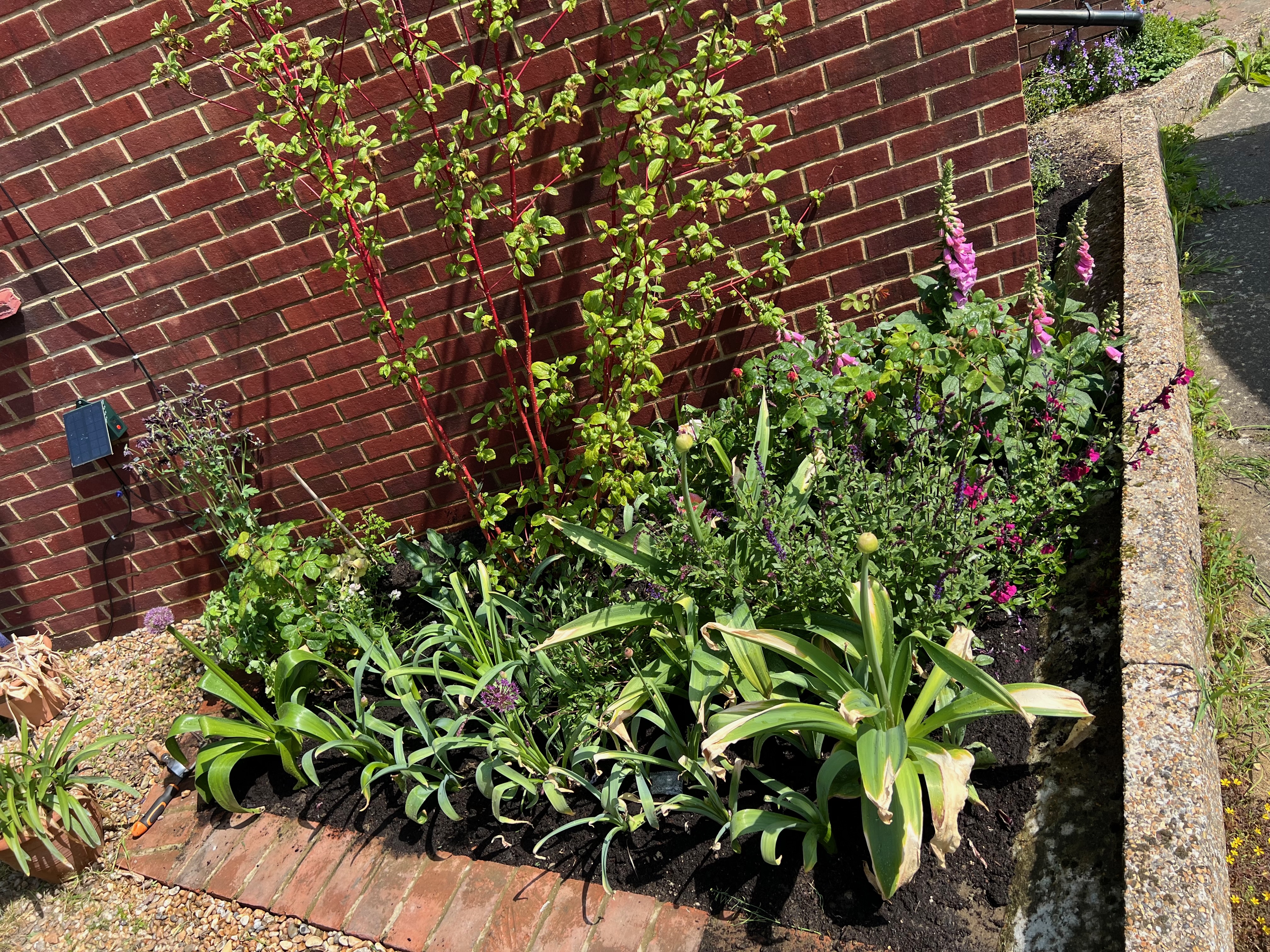
In the side garden I planted a dogwood Cornus alba ‘Sibirica’[RHS] in late summer last year. I’ve already had several compliments about its striking red stems, which is the reason I picked it, but now as it grows out a bit it adds height and texture to the border as it begins to build in early spring. A very welcome addition. I’ve also added bulbs: the year started with a normal display of tulips, they were nice but I felt maybe a little underwhelmed. Now the alliums are coming in, and I was tempted by some giant alliums they had on sale in October. I don’t recall the variety exactly, but the bulbs were the size of grapefruit. I’m hoping to see colossal purple fireworks in the next few weeks. Since the tulips have finished, I’ve cleared them out and mixed in some Gladioli and Crocosmia to come in after the alliums.
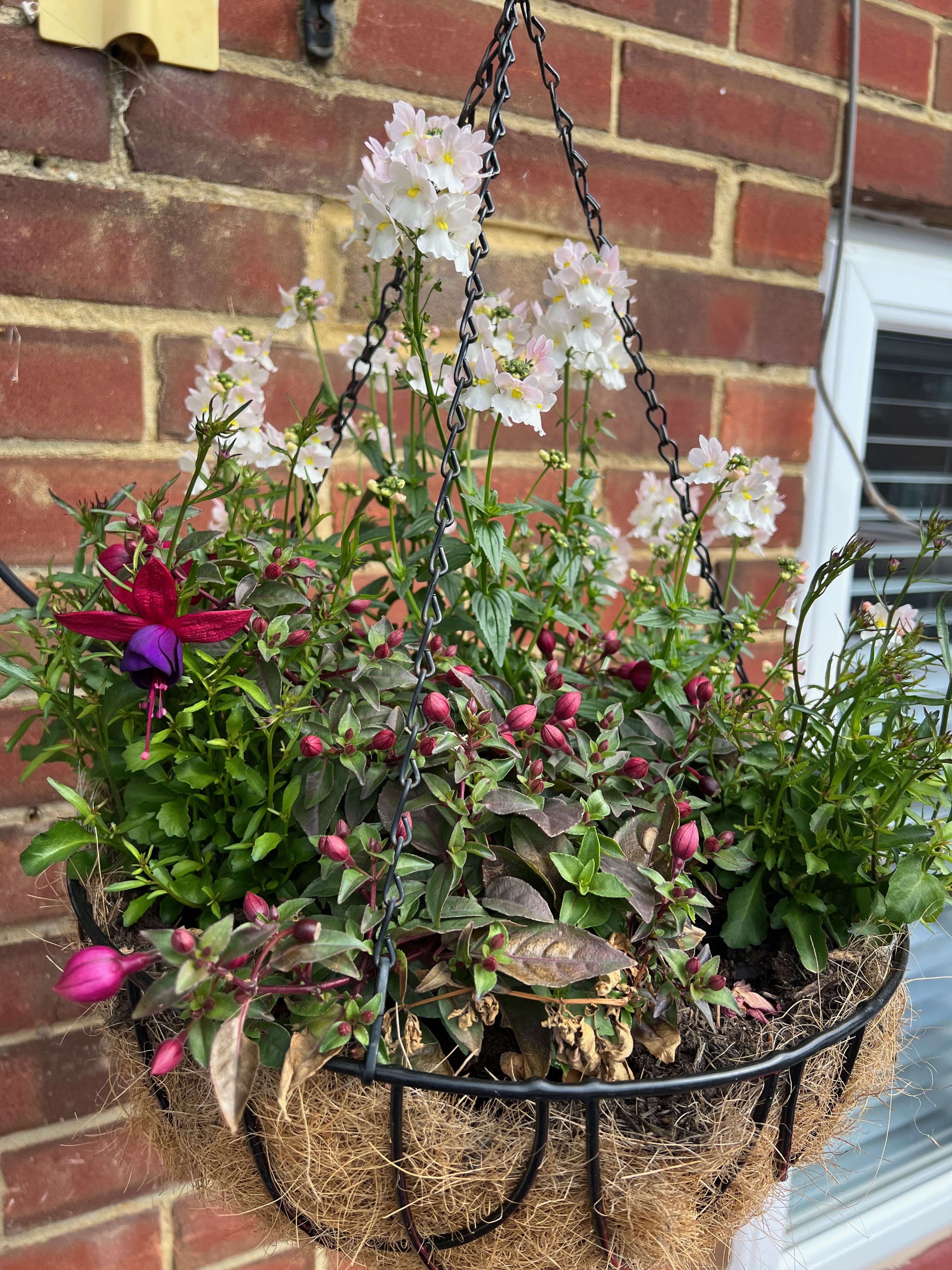 We have sweet peas by the front door, and I have replicated last year’s successful hanging baskets of Nemesia ‘Wisley Vanilla’[RHS] and fuchsias.
I didn’t bother with the ivy though, it didn’t really thrive or add much to the display.
We have sweet peas by the front door, and I have replicated last year’s successful hanging baskets of Nemesia ‘Wisley Vanilla’[RHS] and fuchsias.
I didn’t bother with the ivy though, it didn’t really thrive or add much to the display.
We will of course have sunflowers and Cosmos again. I have a few Cosmos ‘Double Click Cranberry’ and Cosmos ‘Candy Stripe’ from last year, and have added some Cosmos ‘Dazzler’ as a new variety (it looks a lot like ‘Candy Stripe’…). We have ‘Little Dorrit’[RHS] as our main variety of sunflowers, but have a few ‘Titan’ from last year’s saved seed. Those will definitely go up to the allotment for the annual sunflower competition.
Finally, I’ve added some Aquilegia. The Dane John Gardens in Canterbury have recently been refurbished – the grand opening is on the 24th – but as a public space we can now walk through and be nosey. I noticed some tall purple flowered plants and asked a friend about them. Aquilegia! I’m hoping that what can survive in a public garden can also survive in my own.
I very recently learned that ‘cultivar’ is a contraction of ‘cultivated variety’. Maybe it’s obvious to others, but it wasn’t to me!↩︎